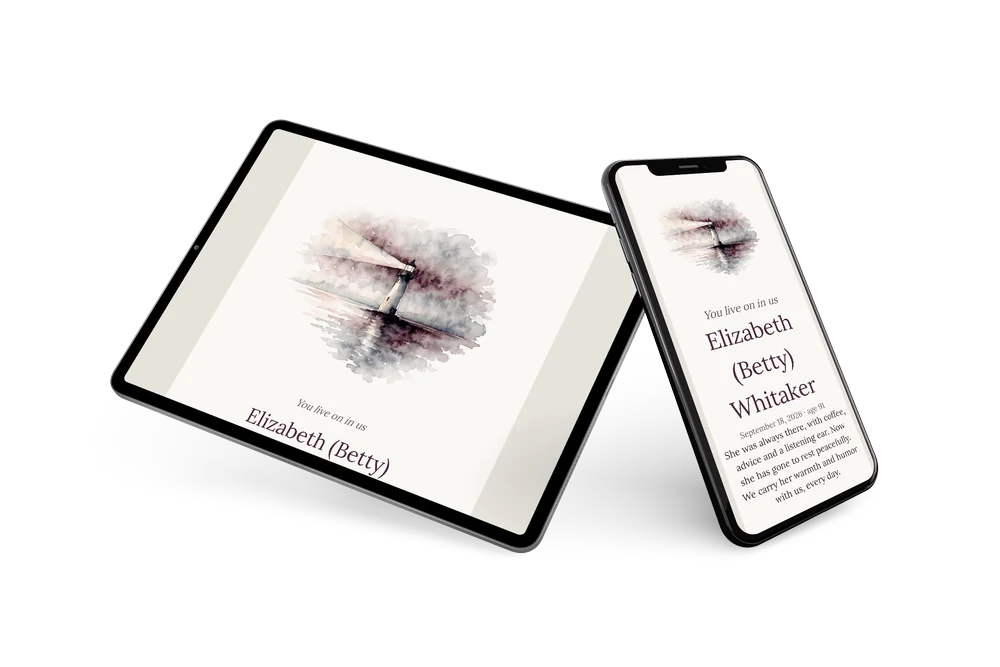
A soft, maritime funeral card
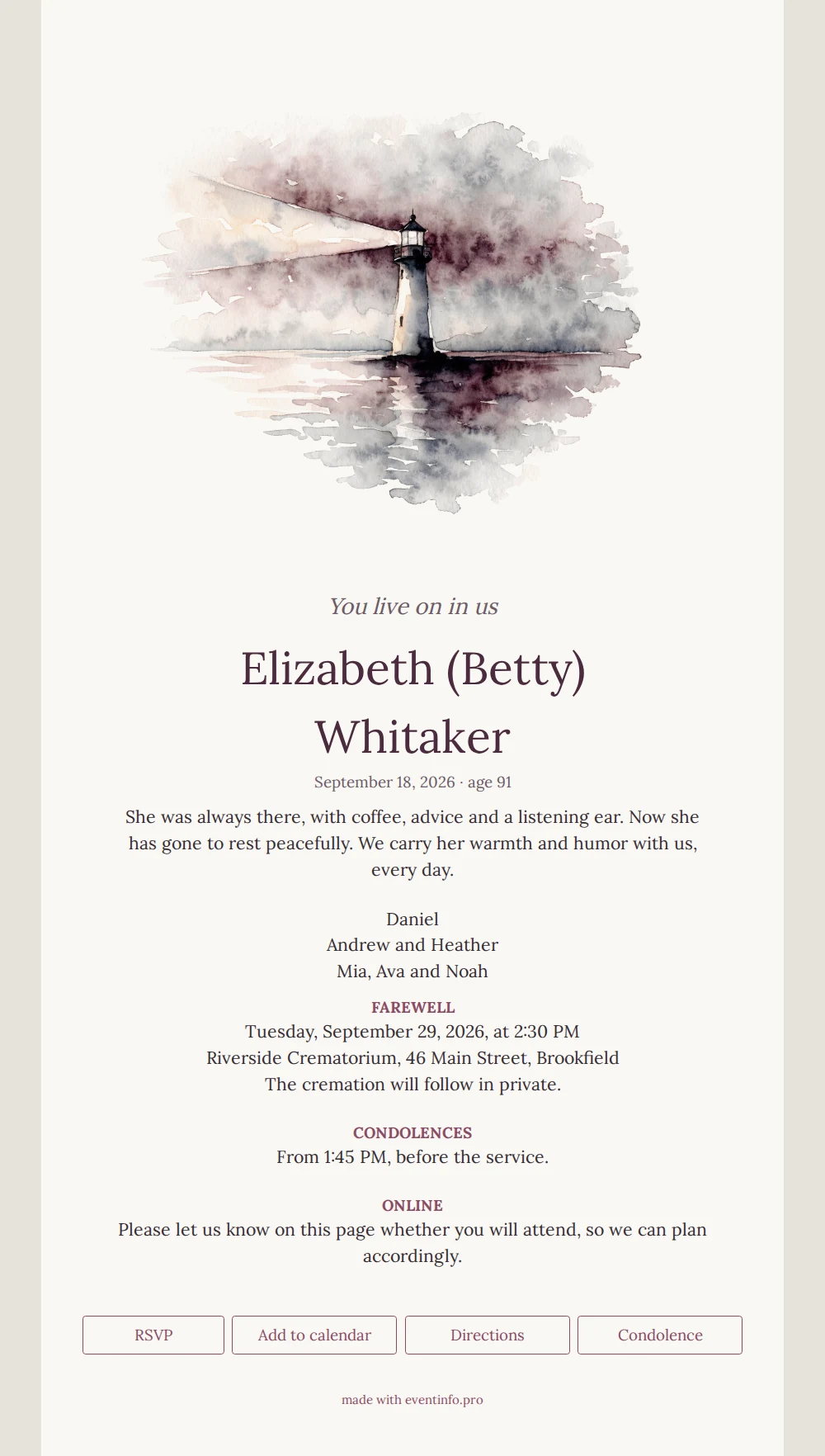
A death announcement published online instead of on paper is called an online funeral card. It holds the name, the dates and the practical arrangements of the farewell, and it reaches every recipient at the same moment through a link. This card leaves room for silence, with one painted image and generous white space.
The light palette begins with the greige border around the card and the soft off-white of the card itself. Into that calm the watercolour brings depth: a lighthouse whose beam cuts through clouds in mauve and slate grey, standing above water that reflects the same colours. The typography follows the painting, with one classical serif used for everything, the name in large deep aubergine type and the headings in small, rosy capitals. It suits a formal announcement that should still feel warm.
Beside the announcement, the card gathers messages of sympathy in an online guestbook, where friends and relatives can write a few words even if they cannot attend the service. The family can reread those messages later, all in one place.
Create your own online funeral card
Use this design as a starting point and create a fitting online funeral card within minutes.
Frequently asked questions
Can the card be ready at short notice?
Yes. Everything but your own content is already in place, so filling in the texts, checking them and sharing the link is usually a matter of an afternoon. No printer or post office is involved.
What can people do besides reading the announcement?
They can offer condolences in the register, find the route to the service and store the date in their calendar. Because this card invites a reply, they can also confirm their attendance on the same page.
Does the watercolour dominate the text?
No. The painting sits at the top, fading into the paper at its edges, and the name below it is set large and dark enough to hold its own. The rest of the card is text only, so the image introduces the card rather than competing with it.
How far can I personalise the card?
Change any line, replace the lighthouse with another image or a portrait, and rename the headings to fit your arrangements. The portfolio shows further designs if you would like to compare before deciding.
Are there costs beyond the card itself?
No paper, no postage and no charge per recipient, so sharing widely costs nothing extra compared with a printed run. The pricing page explains what belongs to a card.
Design details: fonts and colors
Fonts
- Header 1 — Lora
- Header 2 — Lora
- Text — Lora
Colors
- #6c5b66 — Header 1
- #4b2b3e — Header 2
- #352d33 — Text
- #faf8f5 — Card
- #e7e3dc — Background
Use this design
Copy this design to your dashboard to use it as a starting point.